Wednesday, August 18, 2010

How do I love thee?


Let me count the ways.

1). I love you because when I got home from a late meeting the other night, you had cooked dinner.

2). I love you because you had also cleaned the bathroom.

3). I love you because you had also folded and put away the laundry.

4). I love you because when I left for work at 0715 the next morning, you were already in the kitchen, canning tomatoes.

5). But mostly I love you because you do all of this without me asking you to.

Patterns of the Past - McCall's #883


From McCall's Needlework and Crafts, Winter 1941-42, a bed-jacket to hand-quilt from silk crepe and lambswool (and then wash by hand for the rest of it's life).

Tuesday, August 17, 2010

Crochet - Double Shell Insertion


From Workbasket magazine, November, 1951. Instructions on my Flickr account.

Monday, August 16, 2010

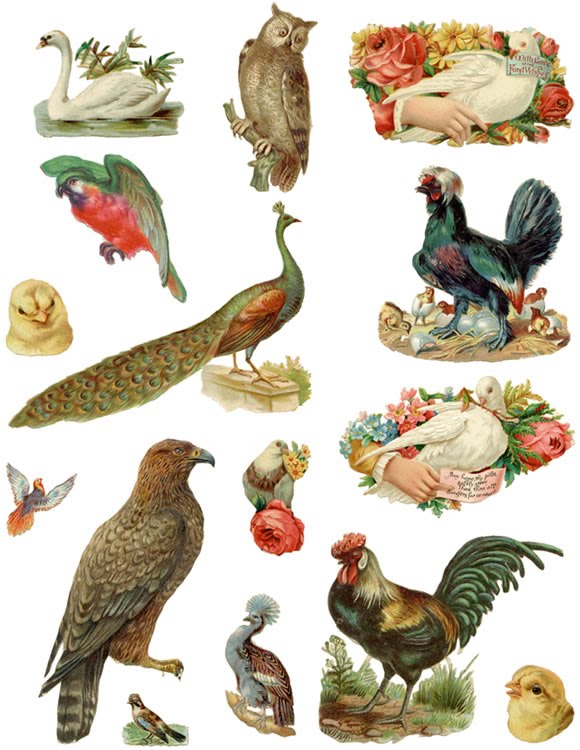
Vintage Images - 19th Century Birds


Copyright-free, from Dover.

Sunday, August 15, 2010

It's Too Darn Hot


Yesterday our bachelor neighbor – we’ve been feeding him vegetables from our garden all season – brought over a bag with two filet mignons, two baking potatoes and four ears of corn in it. Of course I cooked it all for dinner, even though it turned the kitchen into an inferno*.

Tonight we are having BLTs. The bacon will be prepared in the microwave.

Since I have some zucchini to use up, I may even make this to take to work for lunch this week.

Zucchini in Peanut Sauce

4 cups (or so) of thickly-sliced zucchini
1 onion, thinly sliced

Oil your crockpot and put the onion in the bottom. Layer the zucchini over it. Sprinkle very lightly with salt. Set the crockpot to high and cook for an hour to an hour and a half, until the zucchini is limp.

A fair amount of water will have come off the zucchini. Drain it off, turn the crockpot to low, and then heat the following in a covered bowl in the microwave.

¼ cup smooth peanut butter
1 T soy sauce
1 T brown sugar
1 T Japanese vinegar
1 t. flavorless vegetable oil
1 t. sesame oil
Dash of red pepper flakes
about 1 clove of mashed garlic
about the same amount of grated fresh ginger

Thin with a dribble of water, if necessary. Wisk it all together with a fork and pour over the zucchini. Cook in the crockpot on low for another half hour. Or hour, if you forget. This is an extremely forgiving recipe. Serve over rice to soak up the peanut sauce. This tastes good with eggplant, too.

*We don’t have a/c, remember? I spent an extra hour at work Friday afternoon just so I could stay in my nice cool office.

Saturday, August 14, 2010

Caturday!

Friday, August 13, 2010

Thursday, August 12, 2010

The Online Bookshelf - Clark's ONT Book of Needlework


Copyright 1916. Knitting, tatting, embroidery and crochet, from archive.org.

Wednesday, August 11, 2010

Patterns of the Past - Simplicity 1509


Undated, but the NRA sticker places it in the early 1930's. Notice the row of buttons at the waistline; small boys had their shirts buttoned to the waistband of their trousers to keep them tucked in.

Tuesday, August 10, 2010

Crochet - An Edging from 1950


From Workbasket magazine, June 1950. Instructions on my Flickr account.

Monday, August 9, 2010

Vintage Images - Produce Labels


Copyright free, from Dover.

Sunday, August 8, 2010

Are Midnight Suppers Hygienic?


"In regard to the chafing-dish and its most prominent use, some one may fittingly ask: Is it hygienic to eat at midnight? Can one keep one's health and eat late suppers? As in all things pertaining to food, no set rules can be given to meet every case; much depends upon constitutional traits, individual habits and idiosyncrasies. One may practise what another cannot attempt. As a rule, however, people who eat a hearty dinner, after the work of the day is done, do not need to eat again until the following breakfast hour.

Those who are engaged, either mentally or physically, throughout the evening, cannot with impunity, eat a very hearty meal previous to that effort; but after their work is done they need nourishing food, and food that is both easily digested and assimilated. But even these should not eat and then immediately retire; for during sleep all the bodily organs, including the stomach, become dormant. Food partaken at this hour is not properly taken care of, and in too many cases[158] must be digested when the individual has awakened, out of sorts, the next morning.

It is well to remember, also, that, at any time after food is eaten, there should be a period of rest from all active effort; for then the blood flows from the other organs of the body to the stomach, and the work of digestion is begun. Oftentimes we hear men say they must smoke after meals, for unless they do so they cannot digest their food. They fail to see that it is not the tobacco that promotes digestion, but the enforced repose.

But, if we must eat at midnight, the question may well be asked, What shall we eat? That which can be digested and assimilated with the least effort on the part of the digestive organs. And among such things we may note oysters, eggs and game, when these have been properly—that is, delicately—cooked."

From Salads, Sandwiches, and Chafing Dish Dainties, by Miss Janet McKenzie Hill, of Boston Cooking School fame. This particular chapter goes on to give a dozen recipes using lobster, cream, curry powder, etc that would certainly keep me awake.

The book itself is an interesting collection of light dishes (or what passed for light dishes in those days) suitable for Sunday supper, when the main meal would have been eaten just after noon. As hot as it has been here recently, I'm thinking that Miss McKenzie's suggestions would be a boon and a blessing to an Edwardian housekeeper faced with producing dinner in August, over a coal or gas-fired stove, with no air-conditioning (and in a floor-length dress and corsets).

Saturday, August 7, 2010

Caturday!


There's a black panther at the 2.55 mark who really, really likes catnip. H/T to the World's Most Dangerous Librarian by way of William the Coroner.

Friday, August 6, 2010

Quote of the Day


Anything worth doing is worth doing slowly. ~ Mae West

Thursday, August 5, 2010

The Online Bookshelf - The Strand Magazine, April 1893


From Project Gutenberg, a Sherlock Holmes story and (at the very end of the magazine), illustrations of horses doing the kind of jobs we haven't seen in a century.

Wednesday, August 4, 2010

Revenge Is A Dish Best Served Cold

One of my sisters recently pulled something on me -- no need to go into details, but she really, really ticked me off.

The next time I see her children I'm going to tell them she played the accordian in high school.

Patterns of the Past - The Ubiquitious One Yard Apron


One yard patterns were extremely popular in the '40's and '50's. This one is from Workbasket magazine, February 1951.

Tuesday, August 3, 2010

Crochet - a Cloverleaf Edging from 1949


From Workbasket magazine, June 1949. One page of instructions on my Flickr account.

Monday, August 2, 2010

Vintage Clipart - Butterflies


Copyright-free, from Dover.

Sunday, August 1, 2010

A Tale of Two Sundays - August


On the first Sunday of August, 1927, our homemaker prepared a Slice of Ham Baked in Milk, Glazed Sweet Potatoes, Escalloped Tomatoes, Canned Asparagus Tips in French Dressing, Salt Crackers with Cream Cheese, and a Charlotte Russe for dessert.

Baking a ham slice in milk is a way to draw out some of the saltiness and keep the ham moist; and the sweet potatoes were partially pre-cooked and then baked in the oven beside the ham, in a sugar-butter syrup (no marshmallows, a curious omission. 1920’s cooks were madly in love with marshmallows). Both of the side dishes called for canned vegetables, at a time of the year when the average home garden was bursting at the seams with fresh produce. And the dessert was served with something called Mock Cream.

“Mock Cream. Bring to scald in the double boiler a cup of milk. Beat the whites of 2 eggs with a tablespoon powdered sugar and a scant teaspoon butter, creamed until soft enough to beat. Mix a teaspoon cornstarch with ½ cup cold milk, add to the egg whites and stir all with the hot milk. Cook until mixture thickens, strain and cool. It should be of the thickness of real cream. If too thick, thin with a little real cream or milk. This can be used plain or can be flavored and is very useful when real cream is not on hand or has perhaps soured.”

Too much time in a hot kitchen, even for a Sunday. Cold sliced ham, with sweet potatoes made in the cool of the morning and re-heated, and a salad of fresh tomatoes and cucumbers, would be more to my liking. Let’s see what our 1953 cook is up to.

Planked Salmon with Glazed Beets, Buttered Spinach, Mashed Potatoes and Hardcooked Eggs; Hot Rolls, Apple and Nut Salad, and Peppermint Stick Ice Cream with Chocolate Sauce for Dessert.

Planked fish was a popular company dish because the presentation demonstrated the hostess’ skill not only at cooking, but garnishing. Are there any home cooks out there who still plank fish, I wonder? General directions are as follows.

“Planked Fish. Select any fish suitable for baking. Large fish may be split, boned, seasoned and planked flat, or small fish may be cleaned, seasoned and planked whole. Oil plank and preheat thoroughly in hot oven. Place fish in center of plank, brush lean fish with melted butter or French dressing*. Bake in a very hot oven (450° F) 10 to 15 minutes, reduce temperature to moderate (350° F) and bake until fish is nearly tender, allowing about 10 mintues per pound. About 15 minutes before fish is doen, remove plank from oven, garnish with mashed potatoes pressed through a pastry tube and other vegetables as desired. Return to oven to finish baking fish and to brown potatoes. Garnish.”

(*As I've mentioned before, at that time French dressing would be our old friend oil and vinegar).

I’m not thrilled by either menu. Anyone care to vote? Which meal would you rather prepare today?